
ASSATA SHAKUR
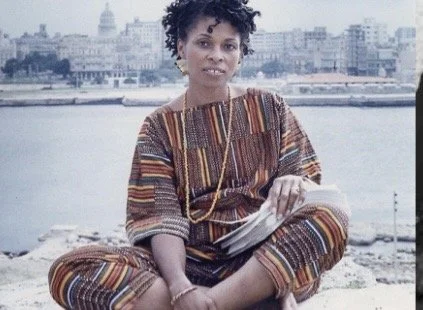
Assata Shakur (Assata Olugbala Shakur) (1947–2025) was a Black liberation activist, writer, and former member of the Black Panther Party and the Black Liberation Army. She later lived in political exile in Cuba, where she was granted political asylum. Assata’s life, writings, and activism continue to influence movements focused on liberation, youth empowerment, healing justice, and collective freedom.
-
Assata Shakur is a pivotal figure in the Black Liberation Movement, known for her activism with the Black Panther Party (BPP) and the Black Liberation Army (BLA) during the 1960s and 1970s.
She was a dedicated organizer who advocated for self-determination, liberation, and dignity for Black people and other marginalized communities around the world. Assata was also outspoken about confronting sexism within liberation movements and emphasized the importance of collective care, political education, and community accountability.
In 1979, Assata reclaimed her freedom with the help of supporters who safely assisted her journey from the Clinton Correctional Facility for Women to exile in Cuba, where she was later granted political asylum in 1984. Her life and legacy continue to shape conversations about political imprisonment, exile, freedom, and the work of restoring communities to wholeness. For many in restorative justice spaces, her story represents resistance to dehumanization and a commitment to building more caring, humane, and liberated communities.
-
Assata Shakur is an American political activist and former member of the Black Liberation Army (BLA), a Black liberation organization active during the 1970s. The BLA emerged from members and ideas connected to the Black Panther Party, which was founded in the 1960s and focused on Black self-determination, community survival programs, and resistance to racial injustice.
Assata became widely known following her 1977 conviction related to the death of a New Jersey State Trooper during a 1973 traffic stop. She consistently maintained her innocence and stated that she was targeted because of her political beliefs and activism. Her case remains widely discussed in conversations about political activism, state violence, incarceration, and liberation movements in the United States.
-
Assata Shakur’s legacy continues to live on through generations of organizers, educators, artists, healers, and young people committed to justice, liberation, and community care. Beyond her political activism, many people remember Assata for her writings, reflections on freedom, and deep belief that ordinary people have the power to transform the world around them. Her work challenged systems rooted in punishment, racism, and dehumanization while calling people toward collective responsibility, healing, political education, and love for community.
For many in restorative justice spaces, Assata’s life represents the importance of truth-telling, dignity, resistance to harm, and the belief that people and communities deserve opportunities for healing and transformation. Her words continue to inspire those working to build schools, communities, and movements rooted in accountability, humanity, and liberation rather than fear and punishment.
Assata also consistently emphasized the role of young people in creating change. Through her writings and example, she encouraged future generations to imagine and fight for a more just, humane, and beautiful world than the one they inherited. Many youth organizers and restorative justice practitioners view her legacy as a reminder that the work of healing communities and transforming systems does not end with one generation — the baton is continually passed forward for young people to carry the torch with courage, imagination, care, and collective responsibility.